How to choose a civil-defence shelter: 7 criteria
In short. When choosing a shelter, check seven things: certification, test results, type (above-ground or underground), ventilation, capacity, installation time and the manufacturer's experience. The key criterion is not price, but proven protection.
1. Certification — the main filter
A shelter must comply with DBN V.2.2-5:2023 and be certified to DSTU 9329:2025 (for primary mobile shelters). No documents — no further discussion.
2. Testing — proof, not promises
Ask about full-scale proving-ground tests: what overpressure the structure withstands (100–500 kPa), and whether there is video. Protection confirmed by testing is worth more than any advertising.
3. Above-ground or underground
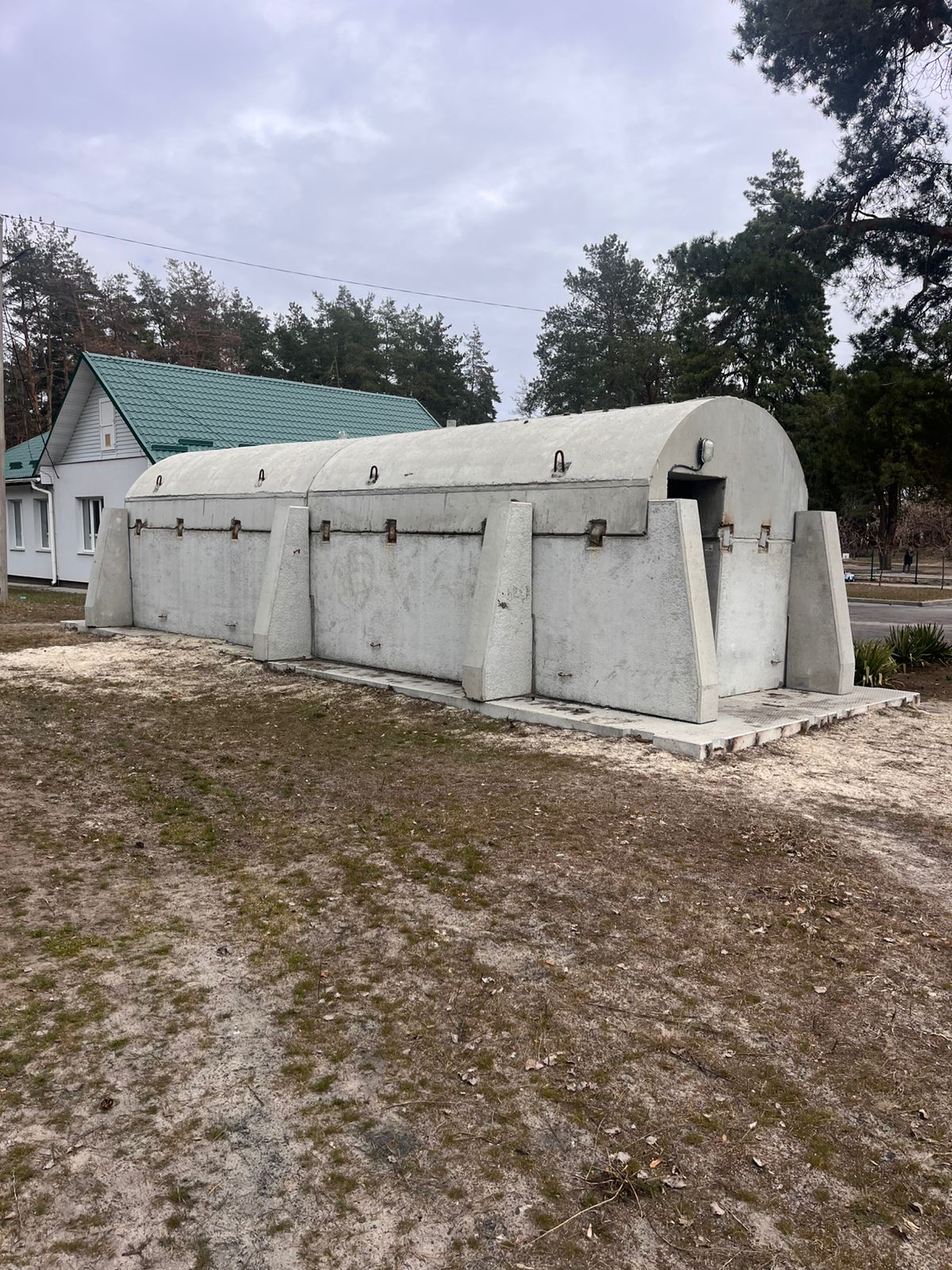
An above-ground shelter installs quickly on the surface — when digging a pit is difficult. An underground one offers maximum protection and frees up the plot — when burying is possible. Above-ground shelters · underground — tailored to your site.
4. Ventilation and life support
Without proper ventilation, a long stay is dangerous. Check for ventilation, an emergency exit and, if needed, a bathroom and climate systems.
5. Capacity and layout
The shelter must hold everyone on site, with accessibility for people with reduced mobility. Modular solutions scale to the required number.
6. Installation time
Fast installation matters when protection is needed without halting work. For modular shelters, installation starts from 8 hours (production and delivery are separate).
7. Manufacturer's experience and reputation
Look at real completed sites, years in reinforced-concrete production, case studies. Experience can't be faked.
Red flags — how not to make a mistake
- no certificate or documents;
- "protection" without any testing;
- a suspiciously low price;
- no ventilation or emergency exit;
- no real installation cases.
The main thing. A shelter is a decision about people's lives. Choose by evidence, not by price. View certified Fortetsia shelters or request a quote for your site.