
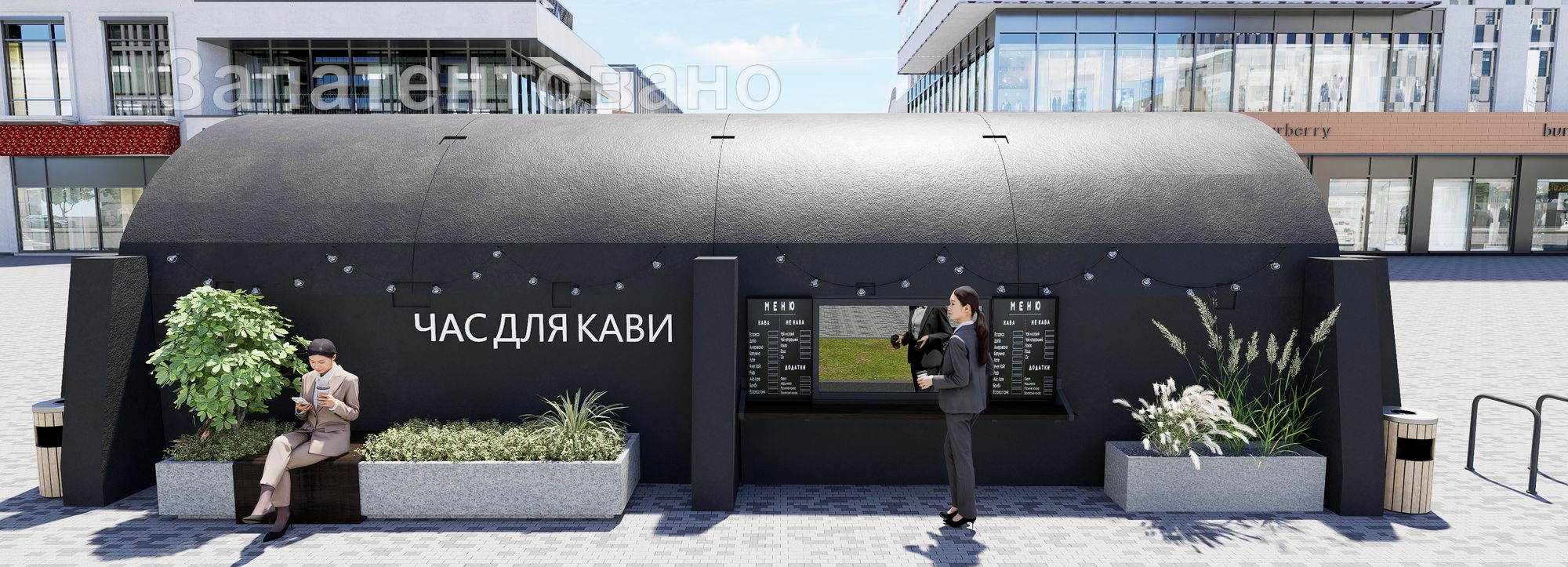
When an air-raid siren sounds at night, an adult's first instinct is to grab documents and a phone, while a child's instinct is to cry or freeze with fear. Psychologists working with children in frontline and rear-area regions of Ukraine have long observed that fear of air alerts is often linked not to the siren sound itself, but to uncertainty, darkness, and surrounding chaos. If a shelter looks like a cold basement with bare walls, a child subconsciously associates it with danger rather than safety. A furnished, familiar, and predictable space, on the other hand, can turn an alert into a routine, almost ordinary action.
Parents who went through the first months of the full-scale war in apartment-block basements recall that small details — a blanket, a toy, a familiar lamp — helped children calm down faster than any words. Today, as setting up safe shelters for children has become part of everyday life for schools, kindergartens, and families across Ukraine, it's worth discussing not only the structural side but also how to make such a space psychologically comfortable.
Why psychological comfort matters as much as physical protection
A shelter fulfills its main function when it protects against shrapnel and blast waves, but that is only half the task. Children who are regularly under stress sleep worse, get sick more often, and struggle to concentrate at school — this is confirmed by observations from child psychologists working with displaced families and residents of frontline cities. If the shelter itself causes additional fear due to darkness, cramped space, or unfamiliar sounds, the child's body faces a double burden: danger outside and discomfort inside.
Parents who have set up dedicated corners for children in a basement or separate shelter notice that children calm down faster if the space is associated not only with alarm, but also with familiar activities — playing, reading, talking. This applies equally to private homes, schools, and businesses where parents work alongside their children. A safe shelter for children is, above all, about predictability: the child knows where to go, what to expect there, and that the place was prepared in advance rather than improvised.
The role of ritual and repetition
Children cope with stress better when actions follow a clear order. If a family has practiced the route to the shelter, brings the same items each time, and follows the same routine every time, an alert becomes a less chaotic event.
- Always the same route to the shelter — no improvisation each time
- The same "alert backpack" for the child, containing favorite small items
- A short ritual phrase from parents, repeated every time
Such simple actions give the child a sense of control over the situation, even if they cannot control the alert itself.
How to set up a space to help children feel calmer
Lighting is one of the first factors affecting how a shelter is perceived. Harsh cold light, or conversely, complete darkness, increases anxiety, while soft warm lighting helps with calming down. Many families use battery-powered lanterns or LED string lights, which don't depend on the power grid and create a more home-like atmosphere.
Sound insulation also plays a role: if a child hears explosions or sirens too clearly, fear intensifies. Simple headphones — even ordinary children's ones, not noise-cancelling — with favorite music or an audio story help redirect attention. Air temperature, ventilation, and comfortable seating or lying areas also directly affect whether a child perceives the shelter as a place of rest rather than punishment.
What to keep in a shelter for children
Furnishing a shelter doesn't require significant expense — what matters more is thinking through the details in advance rather than scrambling for them during an alert.
- A blanket or sleeping bag assigned specifically to the child
- A few favorite toys or books that stay in the shelter permanently
- A supply of water, light snacks, and wet wipes
- A board game or drawing set that doesn't require electricity
When a child sees that "their" things are already in the shelter, they more quickly perceive the place as part of their everyday routine rather than something emergency-related and frightening.
Experience of schools and communities: what practice shows
Ukrainian schools that continue in-person classes are legally required to have a shelter compliant with civil-defence standards (DSTU / DBN); otherwise, teaching must switch to remote or blended format. Teachers who hold classes in shelters during alerts note that children panic less if the space is set up as an extension of the classroom: chairs, small desks, sometimes even a whiteboard for notes. This turns a forced interruption into a lesson that, while inconvenient, remains a familiar part of the school day.
Communities setting up safe shelters for the population in apartment-block basements or standalone structures are increasingly factoring in the presence of children. Some shelters now feature separate rest zones, wall murals, and simple play elements. This isn't a luxury but a practical approach: the less stress a child feels, the calmer the adults around them behave as well.
Businesses and shelters for employees with children
Companies organizing safe shelters for business increasingly recognize that some employees are parents who sometimes need to bring children to work. Thoughtful arrangement — rest corners, a basic stock of children's supplies — makes the shelter more comfortable for everyone who ends up there, not just adults.
Seasonal considerations and family preparation
In autumn and winter, comfort in a shelter becomes a more pressing issue due to cold weather and shorter daylight hours. If a space is poorly insulated, a child gets cold faster than an adult, and cold intensifies the feeling of anxiety. It's worth arranging warm blankets, thermoses with hot tea, and warm clothing stored directly in the shelter rather than at home in a closet.
Conversations with a child about what a shelter is and why it's needed should happen not during an alert, but in advance, in a calm setting. Psychologists advise explaining things in simple words, without unnecessary details about danger, and emphasizing that the shelter is a place where the family stays together and safe. For families setting up safe home shelters, it's important to give the child a "tour" in advance, show them where things are kept, and even play in the shelter once on a calm day.
When a family considers getting its own shelter
Sometimes the nearest basement is too far away, in poor condition, or simply not designed with children in mind, prompting families or businesses to look for their own shelter solution on their property. In that case, it's worth reviewing ready-made model catalogs — for example, the Hobbit House line of above-ground and underground modular shelters, which offers options of various capacities, from small family units to ones designed for dozens of people. In such a space, it's easier to create a familiar corner for a child: dedicated lighting, a bookshelf, a spot for a blanket — everything mentioned above, but fully under the family's control rather than shared with an entire basement. You can review the list of models and specifications in the /shelters section, and the company's engineers prepare specific calculations for the site and number of people individually for each request.
Practical tips to wrap up
Psychological comfort in a shelter is built not on one grand gesture, but on a sum of small, consistent steps repeated every time. The key is to make the space predictable, warm, and one where the child has their own spot and their own belongings.
- Give the child a calm "tour" of the shelter before the first real alert
- Keep a permanent stock of warm items, water, and snacks there
- Prepare a small set of activities — a book, a game, sheets of paper for drawing
- Follow the same routine every time the siren sounds
Safe shelters for children combine a reliable structure with attention to everyday details. When both elements are thought through in advance, an alert stops being a catastrophe and simply becomes part of the day that the family knows how to handle calmly.