
When the Siren Sounds in the Middle of a Test
Picture an ordinary autumn math lesson: children are writing a quiz, the teacher is walking between desks — and suddenly every phone sounds an alarm at once. Within seconds, the classroom must transform from a learning space into an organized line moving through the corridors toward a shelter. This has been the reality of Ukrainian schools for four years running now, and how well-rehearsed the procedure is determines both the speed of the response and the psychological state of the children.
Schools that have been through dozens of alerts agree on one thing: panic doesn't come from the siren itself, but from uncertainty. If a child knows where to go, what to bring, and how long it will take, fear decreases significantly. That's why the action plan for an air raid alert isn't just a formal instruction posted on a wall — it's a rehearsed habit that should be trained as regularly as a fire evacuation drill.
Teacher's Action Plan: The First Thirty Seconds
When the alert sounds, the teacher doesn't wait for instructions from the principal — they act according to a pre-rehearsed scenario. The first task is to announce to the class, loudly and calmly: "Alert — gather your things, we're moving in an organized way." The second step is to make sure all children have left their desks and are heading to the exit, rather than lingering by windows or phones.
It's important that the teacher walks not at the front but behind or beside the line — this way they can see all the children and notice if someone has fallen behind or become confused. Many schools follow the rule "the teacher leaves last, a designated student enters the safe space first," which keeps the class disciplined and prevents chaotic running.
What Teacher Preparation Includes
Teachers undergo civil defence briefings, usually organized by the school administration together with the local emergency management authority (the regional office of the State Emergency Service of Ukraine, SESU). These briefings cover not only the evacuation route but also basic first-aid skills and how to act if the shelter becomes overcrowded.
- Knowledge of the exact route to the nearest safe shelter for children, plus a backup route in case the main one is blocked
- The ability to quickly take a headcount against the class list once inside the shelter
- Understanding how to support children with special educational needs who require extra time or assistance
When a teacher acts confidently and without unnecessary words, children pick up on that calm — a basic principle confirmed by the experience of school psychologists working with children during the war.
Children's Behaviour: What Gets Practiced in Drills
Children of different ages react to alerts differently: younger pupils often take their cue from an adult's emotional state, while teenagers may ignore the signal if they assume it's just another "false" alert. That's why schools regularly hold training drills that practice the actual movement to the shelter, not just the theory.
One practical technique used by homeroom teachers is counting steps or singing a short rhyme while walking through the corridor, to distract children from fear while keeping the pace steady. Another technique is pairing each student with a "buddy" to hold hands with in line — especially important for grades one through four.
What to Keep on Hand
Many schools ask parents to pack a small "go-bag" for their child, kept in the classroom or in a locker near the exit.
- A bottle of water and a non-perishable light snack
- A small flashlight or power bank for a phone
- A note with parents' contact information and blood type, if the child has allergies or a chronic condition
Such a kit doesn't burden the child, but it gives a sense of control over the situation — and that sense of control does the most to reduce anxiety during a long stay in a shelter.
Setting Up a School Shelter: Not a Basement, but a Space for Learning
The modern approach to school shelters treats them not as a dark basement with benches, but as a properly equipped space where a lesson can continue, or children can at least be kept occupied with games. Educators who have been through long alerts note that when a shelter has lighting, seating, and at least minimal heating in winter, children cope with staying there far more calmly.
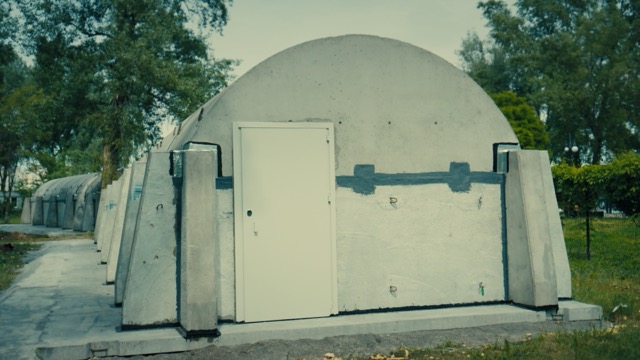
For schools that lack a basement meeting the required standards, or whose building simply cannot structurally support one, communities are increasingly considering standalone modular shelter units installed on school grounds — a particularly relevant solution for rural schools and older buildings without a proper basement. A safe shelter for a business or educational institution, in such cases, becomes a dedicated engineering solution designed around the specific site, the number of children, and the school's logistics.
Seasonal Considerations for Autumn and Winter
As the cold weather sets in, the shelter setup issue becomes more pressing: long winter alerts can mean children spend an hour or more in a shelter at low temperatures. Schools that have planned ahead for heating, warm blankets, and dry spare clothing in lockers get through the winter alert season far more smoothly.
- Checking that lighting and electrical outlets in the shelter are functional before the heating season begins
- Keeping a stock of warm clothing and blankets in a cabinet right next to the shelter
- Arranging with parents for seasonal spare clothing to be kept "just in case" in the classroom
Autumn and winter also mean shorter daylight hours, which is why independent lighting in a shelter isn't a luxury — it's a necessity for keeping children calm while inside.
The Role of the Community and Parents in School Preparedness
Preparing a school for air raid alerts isn't solely the administration's responsibility — it's joint work with the parents' committee and the local community. In many towns, parents get involved in equipping shelters: bringing furniture, games, and books so that time spent underground isn't wasted.
When a school has no basement of its own, or its existing one doesn't meet the required standards, some communities choose to install ready-made modular shelters in the schoolyard or at the kindergarten — such structures are installed without major construction work and are custom-sized to the number of children and the specifics of the site. Ukrainian manufacturers, including Hobbit House, offer models of varying capacity — from small underground units to multi-module above-ground structures capable of accommodating a single class or an entire school. The Fortetsia series model has been confirmed, through proving-ground testing on 9 December 2025, to withstand a load of 500 kPa, and the installation of a finished structure (unfinished interior) takes up to 24 hours — meaning a community can resolve its shelter needs within a single week, from delivery to handover.
When an Existing Basement Isn't Enough
Some schools have basement spaces that technically exist but don't meet civil-defence standards in terms of wall thickness or ventilation. In such cases, it's worth considering a standalone modular unit as a supplement to the existing infrastructure — it is installed in the schoolyard and doesn't require lengthy construction work.
- Assessment of the existing basement by civil-defence specialists to check compliance with DSTU/DBN standards
- Calculation of the required capacity based on the number of students and staff
- Site preparation: access for construction equipment, a level foundation, and availability of utility connections
Safe shelters for children are not an issue a school should be scrambling to resolve during yet another prolonged alert; advance preparation saves both nerves and time for the whole community. The cost of such a solution is always calculated individually for the specific site, as it depends on the model, configuration, and delivery logistics — procurement by public institutions is typically carried out through Prozorro, Ukraine's transparent electronic public procurement system.
Summary: What to Check This Autumn
An air raid action plan in a school only works when it has been rehearsed in practice, not merely written on paper. Regular drills, a clear division of roles among teachers, and a properly equipped shelter space — these three elements together build children's sense of safety.
- Check that every class knows both the primary and backup route to the shelter
- Make sure the shelter is insulated and lit ahead of the winter season
- Hold a joint drill with parents and the local administration before autumn ends
A safe shelter for the public — and specifically for children — is the result of systematic work by the school, the community, and parents, work that begins long before the first siren sounds this school year.